Jason Walsh chats to tech chiefs on why open-source software is the backbone of enterprise tech
There was a time when all software was free and collaboratively developed. In the early days of computing, software was not protected by intellectual property (IP) laws, and using computers was a specialist task, meaning every user was effectively a programmer. That changed. In 1976 when a young Bill Gates penned his “Open Letter to Hobbyists”, complaining that widespread copying of his Altair BASIC was making professional software development unsustainable. “Who can afford to do professional work for nothing?” he asked.
Gates’ letter helped give birth to the commercial software industry – yet ironically, decades later, the proprietary model he championed now sits atop a foundation built almost entirely from free and open-source software (FOSS). Still, today, FOSS is no less important. Indeed, virtually the entire internet runs on the so-called LAMP stack (Linux, Apache, MySQL/MariaDB, PHP/Perl/Python). By some estimates, 70 to 90 per cent of today’s software either is fully FOSS or contains significant FOSS underpinnings. Others say more: Synopsys’ 2020 OSSRA Report found that 99 per cent of audited codebases contained at least one open-source component, with open source comprising 70 per cent of the code overall.
This is all a case of measuring digital string, though: whatever the exact figure, we can say with certainty that FOSS is crucial. The bits and bobs we all know about – Linux, for example – are only the visible tip of the iceberg, though. The web itself, too, is fundamentally open. Indeed, its creator Tim Berners-Lee recently expressed concern that the web he designed as open was being locked down. Writing in the Guardian, Berners-Lee said that the web was being transformed into a small number of private ‘platforms’. “On many platforms, we are no longer the customers, but instead have become the product,” he said.
True, Berners-Lee’s complaint is not specifically about software licensing, but his argument about openness versus platform landgrabs is analogous. The irony, of course, is that those platforms – many closed at the user level – are built on open-source foundations.
Clare Dillon, co-founder of Open Ireland Network (OIN), a non-profit social enterprise that supports those interested in open source in Ireland, says that while the general public may have a dim understanding of it, those at the code face were well aware of FOSS. “I think there is a recognition in places, certainly in the software development [community]. No developer is ever going to do something without at least looking at open-source software; that’s just how software is,” she says. “Ninety per cent-plus of the world’s software has some open source in it. Seventy-plus per cent of all software is completely open source. It’s a thin sliver on top that is truly proprietary. I do think there is a growing awareness about what that means in corporate software development programmes,” Dillon adds.
OIN runs the National Open Source Innovation Summit, the next of which will bring together corporate and government users with academics on February 6, 2026 to discuss how open source can support the innovation ecosystem in Ireland.
ADOPTION INCREASE
According to the OpenLogic 2025 State of Open Source Report, 96 per cent of organisations increased or maintained their use of open-source software in the past year, with over a quarter reporting significant increases. But what are they actually using it for? The applications span the entire business technology stack. Organisations deploy open source for operating systems, cloud-native software and containers, databases, and security tools.
Günter Bayer, chief information officer at cloud and cybersecurity services provider Stryve, says that even front-end software based on FOSS is gaining ground, thanks largely to enterprise software congealing around web-based applications. “We’re starting to see Linux virtual desktops. Why pay for a Windows licence when you’re using web apps? All you need is a browser. In the business space [until recently] it was like, ‘Oh Jesus! Linux!’”
This trajectory makes perfect sense: back in the mists of time, Bruce Perens told this, then wet-behind-the-ears journalist, that as much as 90 per cent of software was developed for internal use by businesses and never seen, at least in object code form, outside those businesses. It was a point well made. Typing away in my word processor, I had not considered that my experience of software was rather different to that in the corporate world. Perens would know, too: he penned the open source definition, after all.
Today, FOSS is used for pretty much anything you can imagine. Toyota used Odoo for its enterprise resource planning (ERP), as does chipshop AMD. Airbus, Orange and Decathlon, meanwhile, are known to use Taiga for project management. Dublin-based Linux distribution Zorin OS, too, made a splash when it was adopted by a local authority in Italy.
Of course, none of these outfits are using FOSS on the cheap: all will either have custom in-house development and support, or will be paying for it. Indeed, providing support for free software is the classic FOSS business model, and how the likes of Red Hat and SuSE make their money.
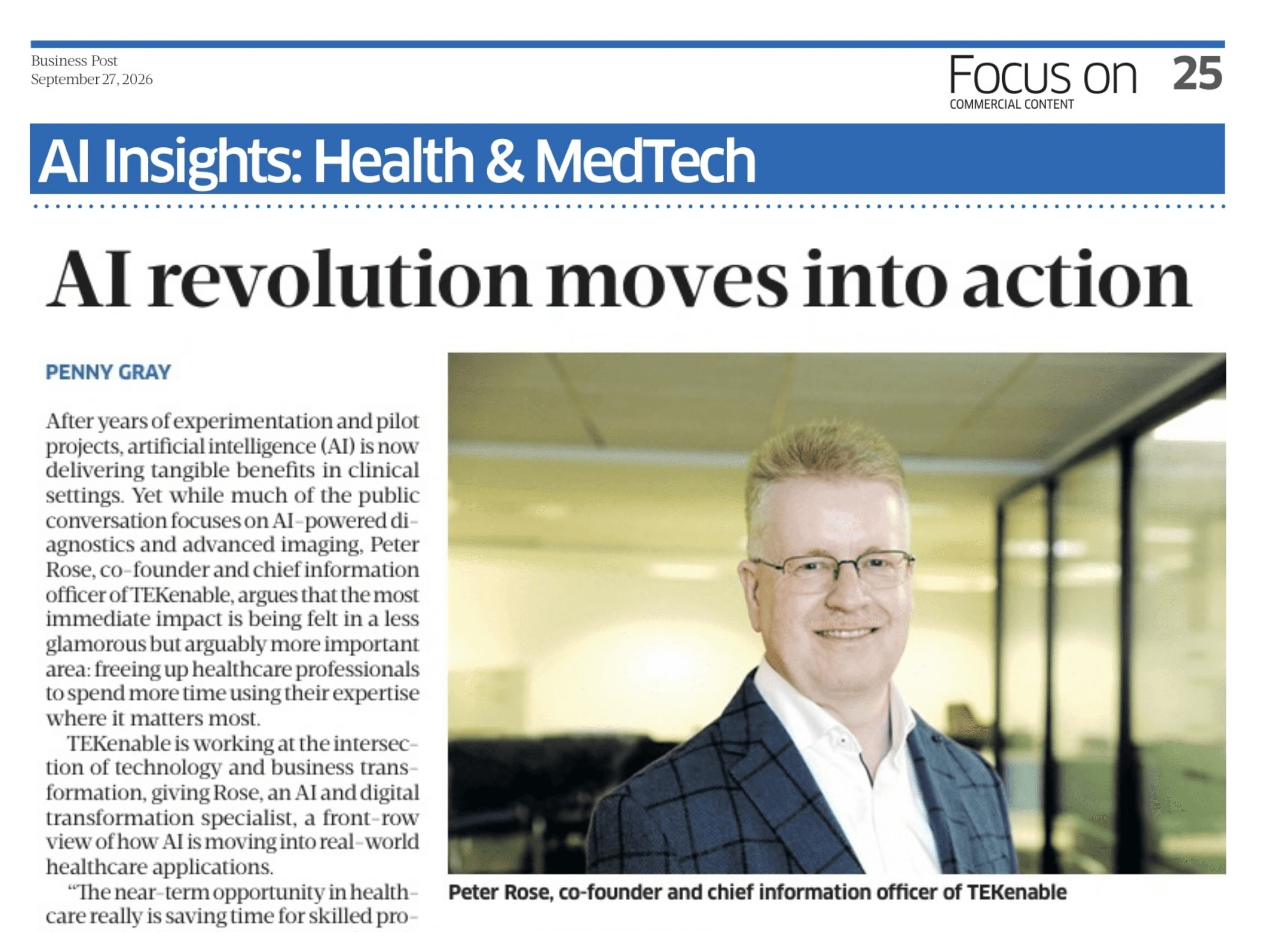
Peter Rose, group technical director of Dublin-based digital transformation and IT consultants TEKenable, says he does not believe that many people appreciate the extent of open-source software used by businesses because, while end-user applications may be out in the open, the likes of firmware are more occluded. In addition, he says, only technical and legal people really think about this kind of thing.
“It is very often embedded in commercial products in a way that is quite hidden, as well as in a prominent position where it is easily identifiable,” he says. “For instance, the Sky box that many people have connected to a satellite dish has a hard-to-find menu that lists pages of open-source software used in the box. Most people probably assume, if they think about these things at all, that Sky or the box manufacturer wrote the software that runs the box: they only wrote a small percentage of it. From embedded systems to most of the web site frameworks and supporting libraries, open source is everywhere.”
ABANDONWARE
A growing concern in the FOSS world is the threat of development drying up. After all, if programmers stand on the shoulders of giants, it does help if there are a few giants around. Bayer says the importance of FOSS is almost unimaginable, particularly at the level of the infrastructure that functions as the plumbing for our digital world. “Every web page you go to, 90 per cent of the time that’s running on an open-source [web] server running Apache. Imagine Apache suddenly stopped? The world would stop,” he says.
Why do projects cease up then? There are a multitude of reasons. For instance, many young developers move on in their lives, while some projects never attain critical mass. Arguably a cultural shift is at play too, with startup culture and its promise of a shot, however unlikely, at massive wealth, leaving the 1990s and 2000s as the high watermark of software created for the love of creation.
Of course, romantic as the image of the bedroom coder is, it does not represent anything like the majority of FOSS development. Instead, businesses from startups to giants like IBM subsidiary Red Hat, and even the likes of proprietary software vendors Oracle and Microsoft, contribute to developing and maintaining FOSS codebases. “Because it’s so critical, it has become backed by corporations,” Bayer says.
Rose says that the issue is real, but needs to be understood in a broader context. “Commercial software can also be abandoned if the company concerned changes strategy, but that company typically faces a penalty in loss of reputation and customers if they do so, whereas open-source software can quietly fade with no penalty for the developers,” he says. “In reality, using open source is going to mean investing more in keeping your systems evergreen as rather than progressive upgrades there can be discontinuations that require substantial re-engineering using another product to keep your systems fresh and secure.”
There are also potential legal issues, he adds. “Open-source licensing conditions are a major issue for most companies that build software solutions and is another minefield to be cautious of.”
THE AI FACTOR
Developers have been sharing routines forever, with tools like GitHub used to give and take code. Today, as with everything, this has been overtaken by AI. I recently spent a weekend using AI to create two pieces of software: one for planning a magazine and the other for invoicing. The first is such a niche task that commercial software to do the job is scarce and expensive, whereas the second was simply a case of my not wanting to be gouged by vendors. I could have used traditional tasks to do both jobs, but the labour involved always made it uneconomical. No more. (For the record, the AI did an impressively and depressingly good job.)
AI coding tools, however, are utterly reliant on FOSS. Think about it this way: the more training an AI receives, the better it gets. Without access to a vast ocean of open-source code, AIs would lack the capabilities they have developed so rapidly as they would only have learned from in-house code, or code purchased specifically for training.
There is also the possibility of accidental plagiarism. Some FOSS licences, such as the BSD and MIT licences, more or less allow users to do whatever they want with software. Others, such as the GPL, insist that derivative works remain free and open. So what happens if an AI regurgitates a chunk of GPL code? Who owns it? And what licence is published under?
There are other potential dependencies, too. Dillon says businesses are increasingly using Software Bills of Materials (SBOMs) to track their open source components and licensing obligations. “What’s happening now is people are looking at their software, saying here is my SBOM,” she says. “There are even national level methods of ensuring the dependency [chain],” she said, noting that under the EU’s Cyber Resiliency Act, software providers must produce a SBOM.
Dillon believes this growing regulatory attention reflects a broader shift in how organisations think about open source. In other words, whatever else the future holds, it will hold more mission-critical FOSS: particularly in light of initiatives like the United Nations’ call for Digital Public Infrastructure to be built on open source for easier adoption and greater trust. “I do think there is a growing awareness about what that means in corporate software development programmes,” she says.
The above text was reproduced from the interview published in Business Post on October 27th, 2025.
FOSS for Business Transformation FAQs:
What is FOSS?
FOSS stands for Free and Open Source Software. It refers to software that is freely available to use, modify, and distribute. Its source code is open to the public, allowing collaboration and transparency.
Why is FOSS important in enterprise technology?
FOSS forms the backbone of most enterprise systems, from operating systems like Linux to web servers like Apache. It powers cloud platforms, databases, and even AI development tools. According to industry reports, over 90% of software contains open-source components.
What are the risks of using FOSS?
- Abandonment: Projects may lose contributors or funding, leading to stagnation.
- Licensing: Some licences (like GPL) require derivative works to remain open-source, which can create legal complexities.
- Security: Without proper maintenance, outdated FOSS components can introduce vulnerabilities.
How do companies manage FOSS dependencies?
Many organisations use Software Bills of Materials (SBOMs) to track open-source components and ensure compliance with licensing and security standards. This is becoming increasingly important under regulations like the EU’s Cyber Resilience Act.
What role does FOSS play in AI development?
AI coding tools rely heavily on open-source codebases for training. Without access to vast libraries of FOSS, AI models would be far less capable. However, this raises questions about licensing and ownership when AI-generated code resembles existing open-source code.
What’s the future of FOSS in business?
FOSS is expected to become even more central to innovation. With growing regulatory attention and corporate investment, it’s evolving from a grassroots movement to a strategic asset in digital transformation.