Turn an underperforming CRM into a business tool people actually use
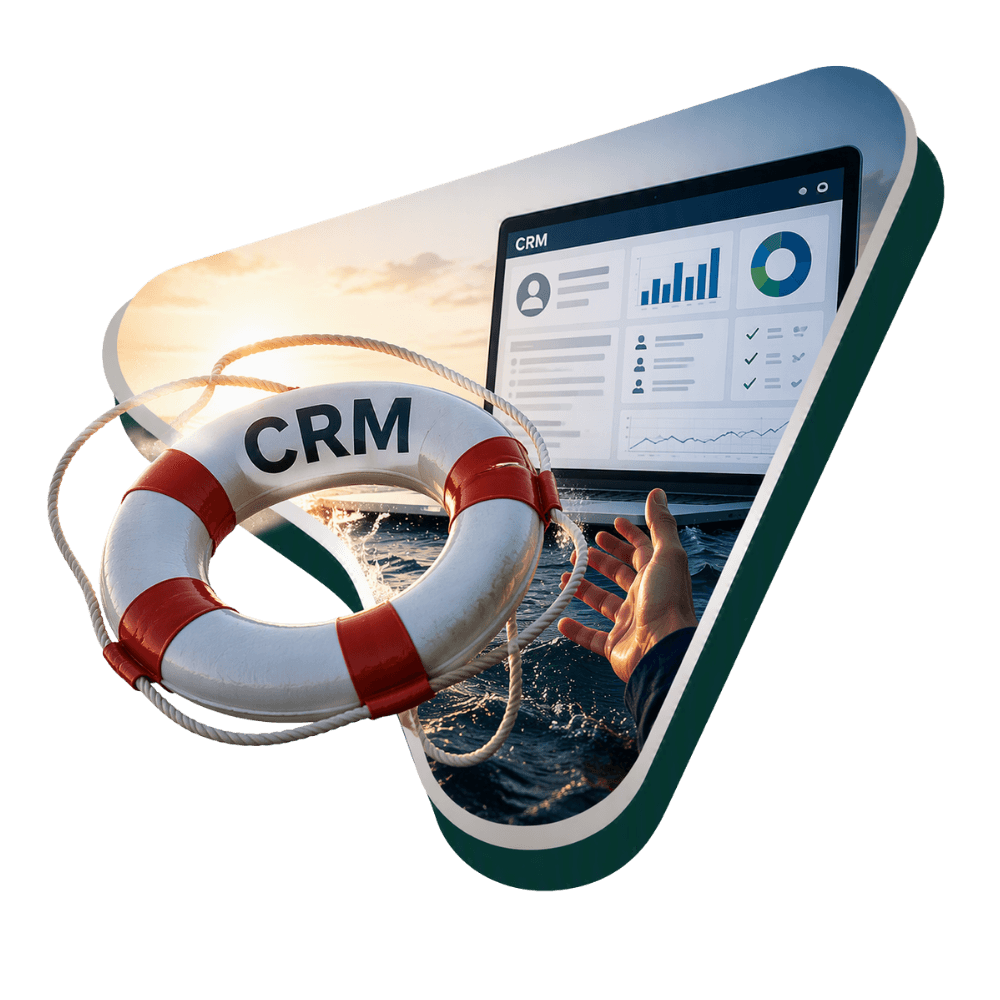
CRMRescue&Recovery helps organisations transform an underperforming CRM into a valuable business asset. We assess your current environment, resolveadoptionandprocesschallenges,optimiseyourplatform,andalignitwithyourbusinessgoalstodrivegreaterefficiency,userengagementandreturnoninvestment.
Many organisations reach a point where users avoid using the CRM system, leading to data quality declines and leadership loses confidence in the insight it provides. The system is often blamed, and replacing it can feel like the only option.
But replacing your CRM may not solve the underlying issue.
Our focus is not simply on fixing technology. It is on making CRM useful, relevant and aligned to how your business actually works.
Are theseCRM problems familiar?
You may need CRM Rescue & Recovery if your users are saying things like:
“We hate using the CRM.”
“It is clunky and hard to work with.”
“It is just a glorified contact list.”
“It does not give us the insight we need.”
“The data is incomplete or unreliable.”
“We spend time updating it, but get very little value back.”
“We may need to replace the system completely.”
These symptoms are common when a CRM has been implemented as a technical system rather than designed around business outcomes, user needs and measurable value.
Why CRM Projectsoften lose momentum
CRM problems are rarely caused by one issue.
Common issues include:
Poor user
adoption
Users do not see enough value in the system, so they avoid it or update it inconsistently.
Weak data
quality
If people do not use the CRM properly, the data becomes incomplete, outdated or unreliable.
Limited business insight
Poor data means the CRM cannot provide meaningful reporting, account visibility or customer intelligence.
One-size-fits-all design
The CRM has not been adapted to the specific needs of your business, teams or customers.
In many cases, the CRM has been implemented out of the box, with limited tailoring for the organisation’s industry, users or operating model. It may not reflect day-to-day workflows. It may require users to “go and do CRM” as an additional administration task, rather than supporting the work they are already doing.
Understanding whatis wrong
A full CRM replacement can be costly, disruptive and time-consuming. It may also recreate the same problems if the root cause has not been addressed.
Our CRM Rescue & Recovery service helps you understand whether the issue is the platform, the implementation, the process design, the user experience, the data model, the reporting structure or the way the CRM is embedded into the business.
The outcome is a clear view of what should be fixed, what can be improved and where the quickest business impact may come from.
HowWe help
We work with your business and user groups to identify the real reasons your CRM is not delivering and help shape a recovery approach that is practical, targeted and focused on measurable value.
Award Winning Experts
Reshaping the CRM around your industry, company and users.
Improving usability without rebuilding the system from scratch.
Adding selective functionality that gives users a clearer reason to engage.
Improving dashboards, reporting and account-level visibility.
Integrating CRM capabilities into the applications and workflows people already use.
Creating simpler user interfaces where the standard CRM experience is too complex.
Applying AI where it can reduce manual effort, capture information or surface better insight.
Supporting user adoption through focused training and improved process design.
BestSuited for
Organisations considering replacing Microsoft Dynamics 365 or another CRM platform
Businesses struggling with CRM adoption and user engagement
Sales and marketing teams lacking visibility into pipeline and customer activity
Organisations that want measurable business outcomes from their CRM