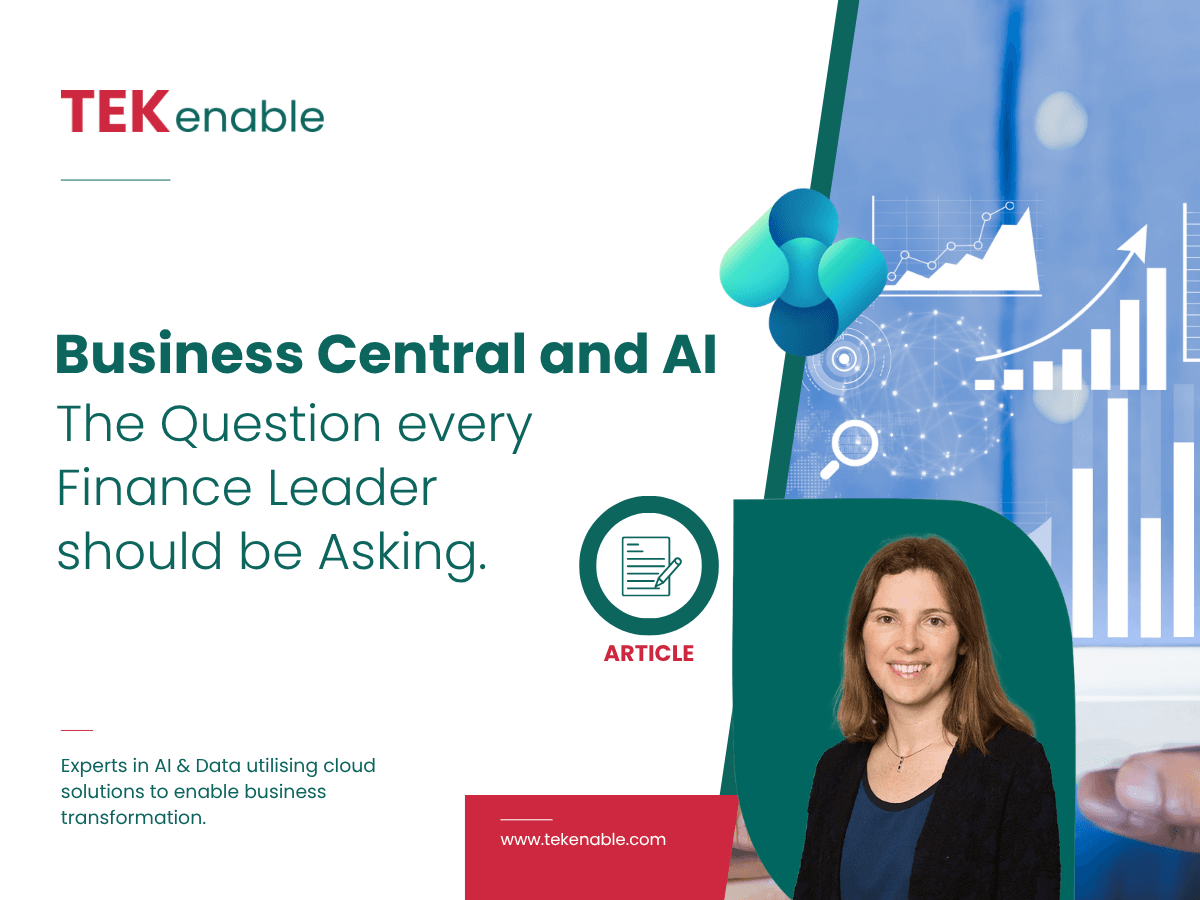
By Suzanne Townsend, Finance Director
I’ve spent all of my career in finance, and one thing I’ve learned is that having data isn’t the same as having insight.
In fact, many organisations have access to more information than ever before, yet leadership teams are still struggling to answer some very basic questions quickly and confidently.
- How are we performing right now?
- Where are the risks?
- What’s driving profitability?
- What does the next six months look like and the rest of the year?
A few years ago, I would have said the answer was better reporting.
Today, I think it’s something different.
Yes faster reporting is now needed but now it’s about analysis and recommendations.
The reality of modern finance
Finance teams sit at the centre of the business. We are expected to produce and report on the numbers, be compliant with Accounting Standards, understand performance, provide analysis, provide confidence in the numbers, manage risk, and give forecasts in various scenarios which will support strategic decisions .
But achieving that becomes difficult when information is spread across different systems, different companies, spreadsheets and processes. I remember how much effort was spent pulling information together rather than analysing it and getting the information into a format that people could actually use was often the challenge.
And that’s not where finance teams add the most value.
The real value comes from understanding what the numbers are telling us and helping the business make better decisions.
Why we invested in Business Central the finance module of Microsoft, as our new ERP
When we looked at our own business, the first phase was wanting a clearer, more connected view of how the business was performing. We wanted faster, more consistent and more accurate information that people could trust. We wanted to spend less time creating reports, and more time discussing what they meant.
We also wanted an ERP system that could connect to other Microsoft modules so that we could see the full picture of the organisation without duplicating data and
eliminating any reconciling areas . Our first module to integrate was the Sales and project CRM system. This integration gives us the ability to feed our sales invoicing process from our CRM through to projects and directly to Business Central. Having the CRM and accounting into one coherent operating system, improves visibility, speed and control while cutting manual work and integration risk
AI changes the conversation again
Like many people, I’ve watched the growing excitement around AI with interest.
There’s a lot of focus on what AI can do.
What interests me more is what it can help people stop doing.
If finance professionals can spend less time reconciling transactions, searching for information, producing routine reports and answering repetitive questions, they can spend more time on activities that genuinely move the business forward.
The most valuable AI capabilities I’ve seen are not the flashy ones. They’re the practical tools that help people work more efficiently and make better decisions.
Sometimes innovation looks less like disruption and more like removing friction.
Looking ahead
I think the role of finance is continuing to evolve.
We are no longer just reporting on what happened, but are increasingly expected to help shape what happens next.
There will be increasing business challenges to solve, and Technology has an important role to play to speed things up to turn the data into meaningful decisions, quickly and confidently.